





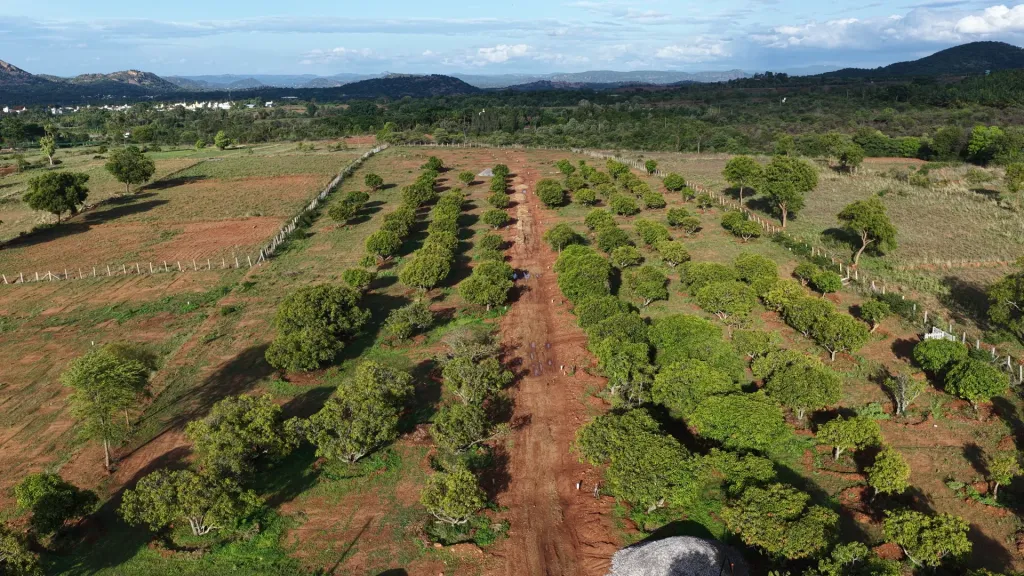




Farmland Title Verification in Karnataka: Step-by-Step Guide
Posted by Delight Eco Farms on ·3 min read

Learn the step-by-step process of farmland title verification in Karnataka, including checking RTC, EC, survey records, ownership history, and legal clearances to ensure safe agricultural land purchase.
Buying farmland in Karnataka requires more than site visits and price negotiation. Legal verification is one of the most important steps in protecting long-term ownership rights. Improper title verification can lead to disputes, access issues, or restrictions on land use.
This guide explains the step-by-step process of farmland title verification in Karnataka.
Why Title Verification Is Critical
Farmland ownership disputes often arise due to:
- Incomplete title history
- Boundary conflicts
- Unclear inheritance transfers
- Encumbrances or unpaid liabilities
Proper verification ensures that the seller has clear legal ownership and the right to transfer the property.
Step 1: Verify the RTC (Record of Rights, Tenancy & Crops)
RTC is a primary land record document in Karnataka.
Check for:
- Current landowner name
- Survey number
- Land classification (agricultural)
- Extent of land
- Tenancy details
Ensure the seller’s name matches the RTC exactly.
Step 2: Check the EC (Encumbrance Certificate)
The Encumbrance Certificate shows whether the land has:
- Existing loans
- Mortgages
- Legal claims
- Registered transactions
Request an EC for at least the past 15–30 years to confirm a clean transaction history.
Step 3: Confirm Survey Number & Boundaries
Each farmland parcel has a survey number.
Verify:
- Physical boundary matches revenue records
- Land measurement matches documentation
- No overlap with neighbouring properties
Boundary discrepancies are a common cause of disputes.
Step 4: Verify Title History (Mother Deed)
The Mother Deed traces ownership history.
Check:
- Continuous ownership chain
- Legal inheritance transfers
- Court orders (if any)
- Partition deeds
A broken ownership chain increases legal risk.
Step 5: Confirm Land Classification
Ensure the land is officially recorded as:
- Agricultural land
Verify that there is no:
- Unauthorised conversion
- Pending land-use disputes
- Zoning violations
Land classification directly affects legal use.
Step 6: Check for Pending Litigation
Verify whether:
- Civil cases are registered
- Revenue disputes exist
- Access road conflicts are pending
Court records and local legal consultation help identify hidden risks.
Step 7: Verify Access Rights
Even legally owned land may face access challenges.
Confirm:
- Legal approach road
- Right of way documentation
- No dependency on informal access paths
Access disputes can severely reduce land usability.
Step 8: Cross-Check Land Tax Receipts
Up-to-date land tax payment confirms:
- Active ownership
- No pending government dues
Request recent tax payment receipts for verification.
Step 9: Local Verification at Revenue Office
Visit the local:
- Village accountant office
- Taluk office
Cross-check records directly from official sources rather than relying solely on copies provided by sellers.
Step 10: Consult a Legal Expert
Before final registration:
- Engage a property lawyer experienced in Karnataka agricultural land laws
- Conduct a formal legal opinion
- Verify compliance with state agricultural ownership rules
Professional verification reduces long-term legal exposure.
Common Red Flags to Watch
Be cautious if you find:
- Multiple recent ownership transfers
- Incomplete documentation
- Informal inheritance claims
- Verbal access agreements
- Inconsistent land measurement
These signals require deeper investigation.
Why Proper Verification Protects Long-Term Value
A clear title ensures:
- Smooth registration
- Reduced legal disputes
- Stable long-term ownership
- Easier resale or transfer
Farmland without proper verification may appear attractive initially but carries long-term legal uncertainty.
Summary
Farmland title verification in Karnataka involves reviewing RTC, EC, survey numbers, ownership history, land classification, tax records, and access rights. A systematic legal review protects against disputes and ensures secure long-term ownership. Proper verification is not optional — it is the foundation of safe farmland acquisition.